

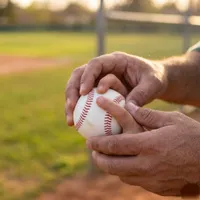
The cutter looks like a fastball right up until it breaks late and short — just enough to miss the barrel or steal a swing-and-miss. It’s a strikeout pitch, but it earns its place only after the fundamentals are in.
Proper mechanics
A cutter is closer to a fastball than to a breaking ball: same arm speed, same intent, with the movement coming from the grip and a little finger pressure — not from twisting or “throwing a breaking ball.” The delivery stays exactly the same as the fastball, and that’s what makes it deceptive. The moment a pitcher tries to manufacture the cut by yanking the wrist, the arm slows and the deception is gone.
Developing it the right way
This is where Coach Myles is deliberate. A cutter is a pitch for a pitcher who has already built a commanded fastball and changeup. Adding break before the foundation is solid — and before an arm is developed enough to handle it — is how young pitchers pick up bad habits and risk injury. MLB’s Pitch Smart guidelines for ages 9–12 advise avoiding pitches other than fastballs and changeups, and for ages 13–14 say breaking pitches can begin after a consistent fastball and changeup — so Coach Myles adds the cutter only after both are commanded. When the time is right, the cutter is taught as a fastball with a grip, not as a trick.
The mindset
The cutter is a conviction pitch. You commit to it like a fastball and trust the late movement; hesitation flattens it out. The cue: it’s your swing-and-miss pitch — throw it to miss barrels, not to nibble at the corner.
Every arsenal is built to the athlete and to where they are in their development. Claim a free first lesson and we’ll map the right pitch sequence for your pitcher.